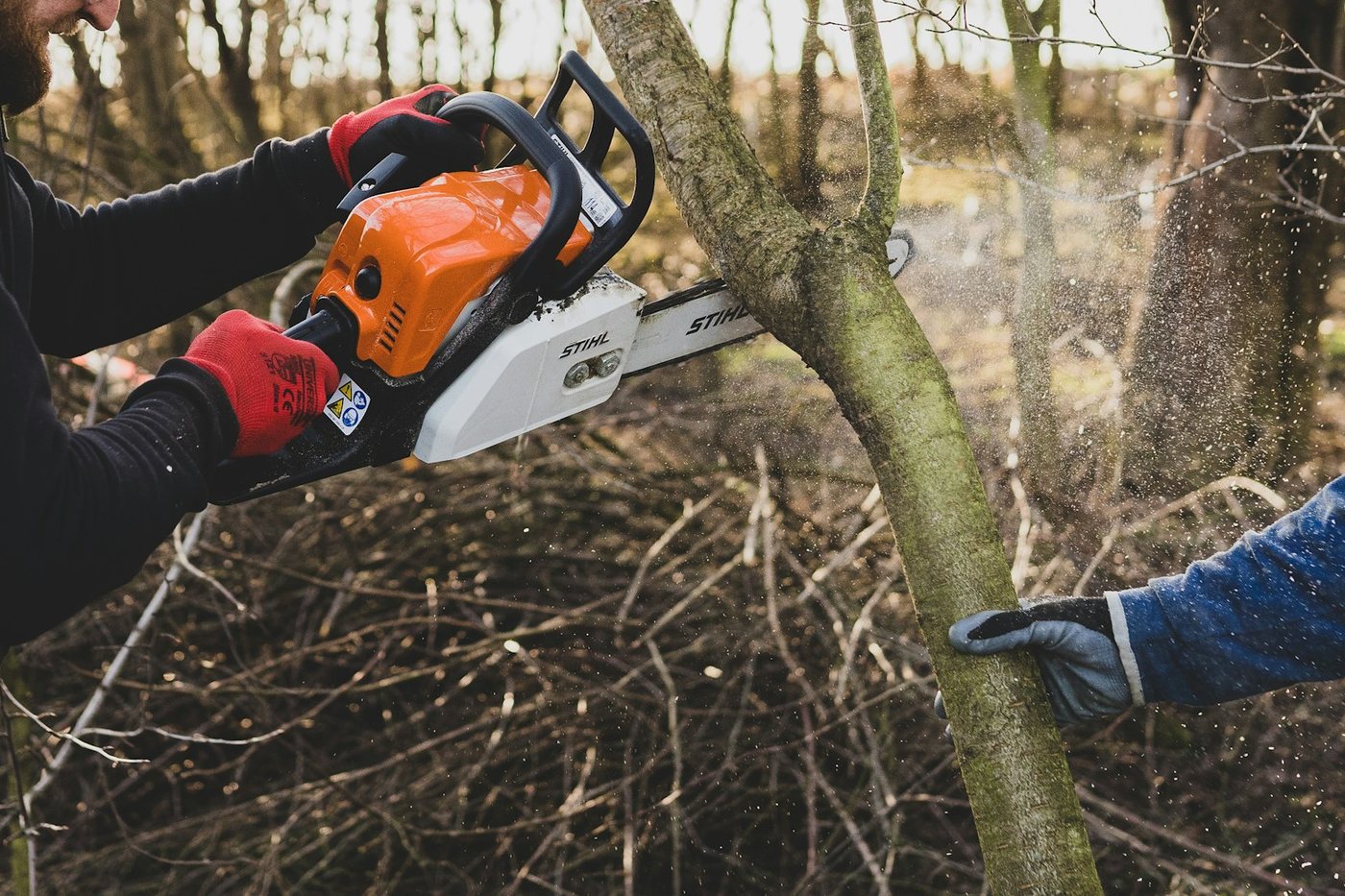
What a tree surgery & landscaping RAMS has to cover
Tree work is one of the highest fatal-and-major-injury rates of any trade, and the chainsaw is at the centre of it. A tree surgery RAMS is judged on chainsaw competence, the drop and exclusion zones, aerial rescue, and how the public are kept clear — not on a generic site-safety paragraph. Landscaping that goes with it brings its own load: plant and mini-diggers, manual handling, COSHH from cement and treatments, and buried services on hard-landscaping digs.
More detail
Start from the task — climbing/aerial pruning, sectional felling, chipping, soft or hard landscaping, pesticide application — because the controls are completely different across them. Aerial chainsaw work and ground-level hedge cutting are not the same risk, and reviewers expect the RAMS to show that.
Chainsaws, felling and drop zones
Anyone using a chainsaw needs a recognised certificate of competence (NPTC / City & Guilds units) for the specific operation, and aerial chainsaw use needs the higher units on top of ground-cutting ones — name them. The PPE is non-negotiable and specific: cut-resistant chainsaw trousers and boots, a helmet with visor and ear defence. For felling, the RAMS needs a drop zone and an exclusion zone (commonly at least twice the tree height) kept clear of the public, and aerial work needs an aerial rescue plan and a second trained climber — never a lone climber with a saw.
Chippers, the public and pesticides
Wood chippers and stump grinders cause severe entanglement and projectile injuries: the RAMS must set out controlled feeding (feed butt-first, never reach into the feed, use the last-metre push and the control bar) and guarding, plus eye and ear protection. Where work is near a road or footway, public segregation and traffic management belong in the document. Pesticide and herbicide application is COSHH work for a certified operator, with controls for drift, the public and watercourses.
Landscaping & Tree Surgery RAMS FAQs
Who is allowed to use a chainsaw on site?
Only someone holding the recognised certificate of competence (NPTC / City & Guilds) for that operation. Cross-cutting and felling small trees, felling large trees, and aerial chainsaw use are separate units — the RAMS should name the ones the operative holds.
Do we need a rescue plan for tree climbing?
Yes — an aerial rescue plan is expected wherever someone is working in the canopy on ropes, with a second trained climber able to perform it. A lone climber with a chainsaw and no rescue capability is a standard rejection.
How far should the public be kept from felling?
Set a drop zone and an exclusion zone in the RAMS — commonly at least twice the height of the tree — and control access to it with banksmen, signage or barriers. Near a road or footway you'll also need traffic management.
Is there a landscaping or tree-surgery report in the builder?
The templates are in the library now; a configurable builder report is on the way. Open any template and use "Request this RAMS" to be notified. Free during early access.